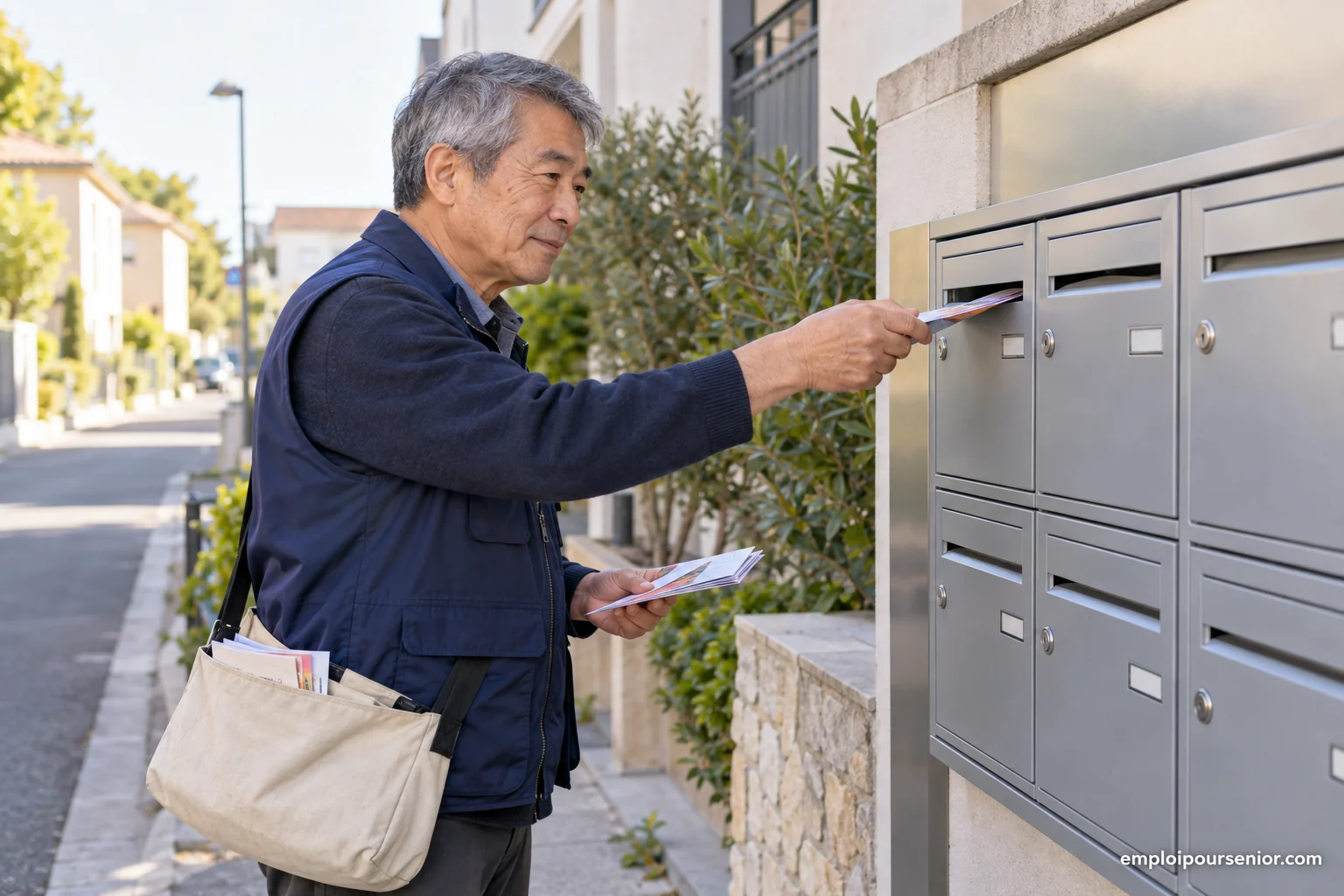
Two related activities: leaflets and newspaper rounds
Two jobs that do not work in the same way are often lumped together under one name.
Advertising leaflet distribution means dropping supermarket catalogues, local trader offers or council documents into the letterboxes of an area. Rounds are defined in advance, and the deliverer follows a map of the sector.
Newspaper delivery means taking the daily or weekly paper, almost every day, to subscribers or points of sale. The round is more regular, earlier and based on a list of customers to serve, with stricter demands on punctuality.
In both cases the work is generally done alone, on foot, by bike or by car, and requires no particular qualification. The terms of contract, payment and regularity differ greatly, however.
A sector in transformation: what to know before starting
Advertising leaflet distribution is going through a period of change. According to industry figures relayed by the specialist press in France, the volume of printed material delivered roughly halved between 2019 and 2023, because of the move of catalogues online and falling paper budgets.
This shift has had concrete consequences: operators reorganising, employees moved to larger groups, restructuring plans at private players. Some regions therefore offer fewer rounds than before, while other operators are still recruiting.
In addition, a few French towns are trying out the "Oui Pub" principle, which bans unsolicited printed adverts unless residents agree. For an applicant, the prudent course is to find out the real state of the local market rather than assuming a round will be available everywhere.
What status does a deliverer or newspaper carrier have?
Status depends on the employer and the type of assignment. The offers we looked at show several arrangements:
- an employee contract, often part-time, with a distribution operator or a postal group;
- a press carrier contract (colporteur), non-salaried, paid by commission, with its own registration and contributions;
- work as a self-employed person, for example as a micro-business, for occasional assignments;
- agency work or fixed-term cover contracts over short periods.
Each status changes social protection, contributions, rights to unemployment benefit or pension, and the way you are paid. A delivery offer may state that the activity is carried out with no employment relationship, with pay per newspaper delivered. Read the contract carefully before committing and ask what is included.
Pay: the per-item logic
No amount can be stated in general, because it varies with the employer, the region and the method of calculation. The most common approach is payment linked to volume: number of leaflets delivered, number of papers delivered, distance covered or length of the round.
In one newspaper offer we saw, pay was calculated per paper delivered, depending on distance, time spent and number of customers. To judge the real interest, convert the earnings into the full time spent, including:
- preparing and sorting the documents at the depot;
- travelling to the sector;
- the round itself, including buildings with entry codes or intercoms;
- fuel costs or wear on the bike;
- returns, complaints and handing back unsold copies.
This simple division stops you relying on a per-item rate which, converted into an hourly figure, may prove very modest.
Hours, weather and physical fitness
Newspaper delivery usually takes place very early, with rounds starting before daybreak and lasting a few hours. Leaflet distribution is more flexible, but sometimes requires delivery within a few days.
The physical demands are real:
- prolonged walking, sometimes on slippery, sloping or poorly lit pavements;
- carrying a bag or trolley loaded with paper, heavier than it looks;
- exposure to rain, cold, heat or ice;
- the need to stay alert at night, with visible clothing and a head torch;
- dogs and gates to open.
A personal health check is useful, particularly for joints, back and balance. A round by bike or car also calls for good eyesight and careful driving in the dark.
Good practice rules out on the round
The work looks simple, but it follows rules that protect both the householder and the deliverer.
Respect the delivery instructions
Notices on a letterbox, such as "Stop Pub" (no advertising), are among the usual instructions to respect. Documents must be put in the box, not left on the ground or in a hallway. Some residential blocks forbid access to communal areas without permission.
Keep to the commitments of the round
The sectors, quantities and deadlines agreed with the employer must be respected. Throwing away or storing leaflets instead of delivering them is a serious fault, which can mean losing the assignment and facing legal action. When there is a difficulty (inaccessible building, error in volume), it is better to warn the manager than to "sort it out" yourself.
How to find a round near you
Several channels are possible, with delays and results that vary by area.
- The recruitment sites of postal groups and distributed-communication operators, which sometimes state the contracts offered.
- Offers published by public employment services, where adverts for newspaper carriers or deliverers regularly appear, often as cover for absences.
- Local newsagents and press depots, which recruit carriers directly for their sectors.
- Employment agencies and local distribution firms.
A call or a visit to the nearest depot is often the quickest way to find out whether a need exists. It is best to ask from the outset about the sector, the frequency, the length of the round and how you are paid.
Combining with retirement and steps to take
Combining a pension with an activity, even a modest one, is regulated. Depending on whether you are an employee, a press carrier or a micro-entrepreneur, the consequences differ for contributions, tax and sometimes certain benefits.
Before accepting, it is sensible to:
- check with your pension fund whether combining is free or capped in your situation;
- ask the future employer to state the status and method of payment in writing;
- find out about insurance in case of an accident during the round, especially for a bike or car journey;
- keep your earnings statements, which are useful for your tax return.
These steps are not complicated, but they prevent nasty surprises. Personalised advice is a matter for the competent body, not an information site.
A sample week and other ideas for extra income
As an example, a fit retiree living in a small town accepts a newspaper round of two to three hours each morning, covering for an absent carrier. He notes that the first days take longer, while he learns the order of the addresses, and that bad weather slows his walking.
He then compares his pay with the real length of his rounds and his costs, and decides to keep the activity two weeks out of three. This example is illustrative and reflects no particular contract.
If an early-morning round does not suit you, other supplements remain possible: home meal delivery, reception work at a municipal facility, small gardening jobs or house-sitting, depending on local needs.
Frequently asked questions
Do I need a licence or a vehicle to deliver leaflets?
That depends on the employer. Some rounds are done on foot in a fairly compact sector, with no vehicle. Others, in rural areas or for newspaper delivery, require a car licence and a car, as several offers show. Ask what means of travel is expected before accepting, and whether costs are covered.
Can I combine this activity with my retirement pension?
In many cases yes, but the rules on working while drawing a pension depend on the scheme, the type of pension and the status chosen. Combining may be free or capped. Before starting, it is better to ask your pension fund, which will explain the effect on your pension and contributions in your exact situation.
How much can you earn from a round?
No general figure can be given, because pay depends on the sector, the volume and the status. It is often calculated per item, for each leaflet delivered or paper dropped. Set against the real time, including the round, preparation and costs, it generally remains a modest supplement. Ask for an example of earnings on a typical round.
Are there rounds all year long?
Regularity varies greatly. Newspaper delivery can offer daily rounds, but with frequent cover work. Leaflet distribution follows the calendar of commercial campaigns, with busier periods before festivals and sales. With paper declining, local availability can change, so enquire on the spot.
What health risks should I allow for?
The main risks are falls on slippery ground, tiredness from very early starts, cold, heat and dog bites. High-visibility clothing, good shoes, a torch and a well-balanced bag reduce them. If you have a history of joint or heart problems, medical advice is useful before committing.
Can I turn down a round that is too heavy?
Depending on status, a self-employed worker or press carrier in principle chooses which sectors to accept, whereas an employee is bound by their contract and hours. It is therefore best to ask about the average length and weight of a round before committing, and to negotiate a trial of a few days to check that the pace is bearable.