What a retirement side job really means
A side job is a paid activity, occasional or regular, carried out alongside a pension. It is not meant to replace full-time employment but to bring in extra income, keep you active or put a skill at other people’s service. The forms it takes are varied: odd jobs, gardening, IT help, private tuition, companionship, childminding, homework support, repairs, sewing.
The first question is not “where do I look?” but “under what legal arrangement will I work?”. Whether you are employed by an individual, a charity or a company, or self-employed, the obligations, contributions and protection are not the same. Thinking this through avoids unpleasant tax or social security surprises. The rules below are the French ones.
Choosing a status: employee or self-employed
Two broad routes exist. The first is employment: an employer, who may be a private individual, a charity, a company or a home-services organisation, signs a contract with you and declares your pay. You then get a payslip and the protection of employment law.
The second is self-employment, very often under the French micro-entrepreneur scheme. In France a retiree can combine a pension with that status, provided the legal conditions are met, notably turnover ceilings and the rules on combining work and pension. You then have to register the activity, keep simple accounts and pay the social contributions due. The pension insurer, Assurance retraite, must be told that you have gone back to work.
Pension and extra income: the combination rules
Combining work with a French pension (cumul emploi-retraite) requires you to have claimed all your basic and supplementary pensions. It is unrestricted, with no ceiling, from the age of a full-rate pension or when the legal age and the required insurance record are both met. In other cases it is capped, and the pension can be reduced if the limit is exceeded.
Activities carried out since 2023 can earn a second, limited pension. New rules have been announced for pensions starting from 2027. Before taking on lots of assignments, it is therefore advisable to run a simulation with the pension insurer: it shows how much room you have and helps you foresee the effect on income tax and, where relevant, on certain social benefits.
The most accessible assignments and what they demand
Several families of assignments come up again and again:
- home services: odd jobs, gardening, upkeep, help with digital tools;
- personal support: company, shopping, outings, help with homework;
- occasional cover in catering, reception or events;
- expertise services: advice, training, proofreading, simple bookkeeping;
- crafts and repairs: bicycles, small appliances, sewing, DIY.
Each assignment calls for skills and sometimes for safeguards: third-party liability insurance, accreditation or a diploma for some regulated activities, a clean criminal record for work with vulnerable people. It is better to check these before presenting yourself as a provider.
Where to find clients or vacancies
Several platforms connect individuals with people offering their services. Some work through local requests, others through short assignments for restaurants, hotels or healthcare establishments. Specialist classified-ad sites aimed directly at seniors and retirees have sections for each type of service.
Beyond platforms, word of mouth remains very effective: neighbours, residents’ associations, town halls, shopkeepers, property managers and retirement residences often post needs. A short message saying precisely what you can do, when you are free and how far you will travel brings more replies than a general advert. Read each platform’s terms carefully, especially commissions and payment arrangements.
Setting prices without undercutting yourself or burning out
The price of a service depends on the local market, the time spent, travel, equipment used and, for a self-employed person, the contributions to be paid. A price that is too low is tiring and eventually discouraging; one that is too high scares off early customers. Compare with similar adverts in your area, then adjust as you learn.
Always state in advance what is included: duration, materials, travel, payment terms. If you are employed by an individual, the legal minimum wage applies. Also note your real hours for a few weeks: tracking them shows whether the activity stays worthwhile once transport and preparation time are counted, and whether it matches the energy you want to devote to it.
Health, safety and insurance: precautions not to neglect
Even a small assignment carries risks: a fall while gardening, lifting, working at height, an accident on the way, damage caused at a client’s home. Professional liability insurance or a suitable cover protects you against the financial consequences of an incident. Depending on your status, protection against workplace accidents differs, and a self-employed person often has to arrange it personally.
It is wise to fit the activity to your physical condition. Better to turn down a job that is too heavy than to get hurt. If you have doubts about a condition or a treatment, ask your doctor. Finally, keep written evidence of what you agree with clients: a simple message stating the task and the price prevents disputes.
A worked example: a former mechanic repairing bicycles
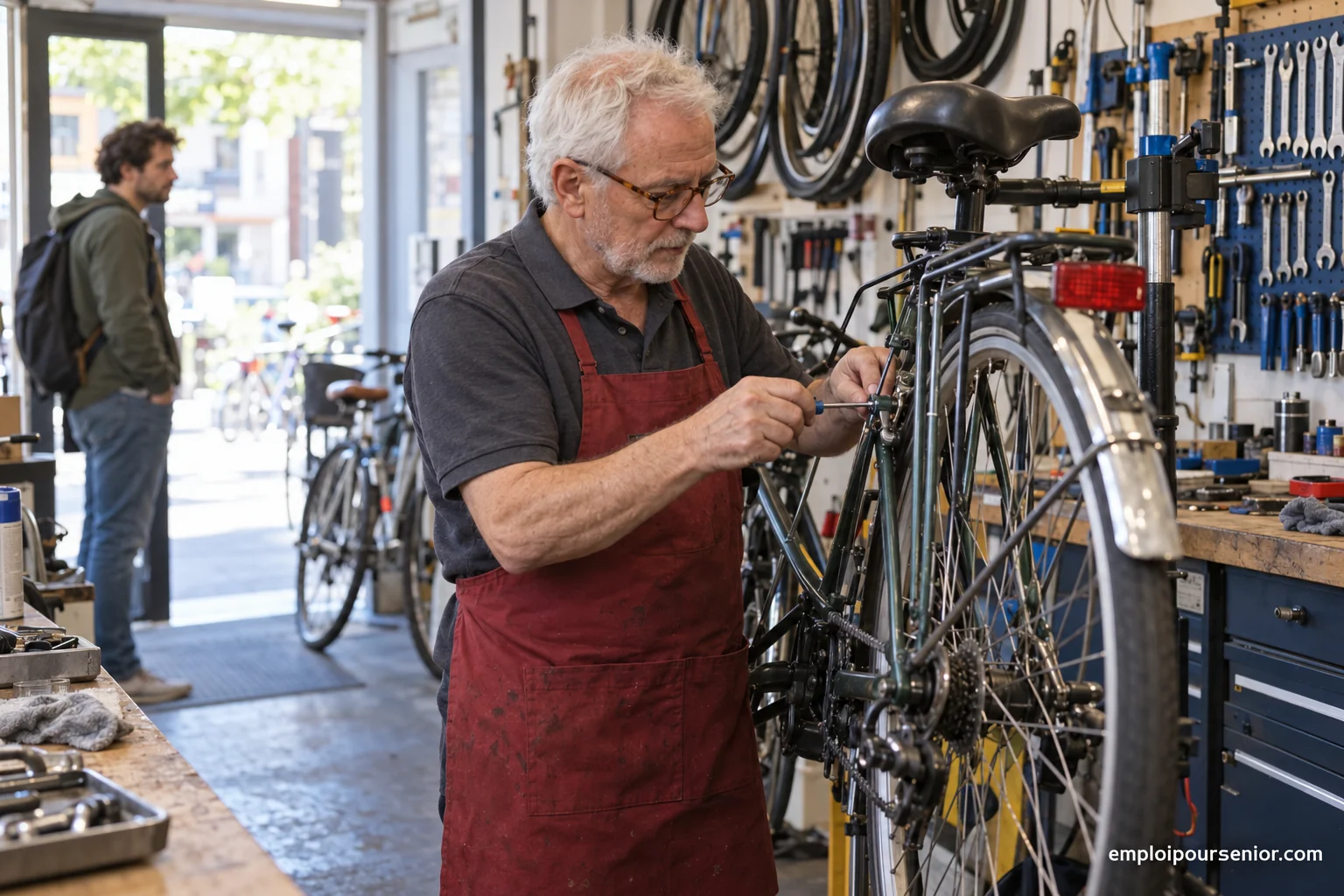
As an example, a former maintenance mechanic, retired for a year, decides to repair bicycles for his neighbours. He first checks his situation on combining work and pension with the pension insurer, chooses the micro-entrepreneur scheme, takes out third-party liability insurance, then posts an advert on a local services platform and another in his residence.
He announces an hourly rate in advance, adds the price of parts and limits himself to two afternoons a week. After a few months he adjusts his prices and turns down repairs beyond his equipment. This example is neither a guarantee of income nor individual advice: every situation depends on the status chosen, local demand and the pension.
Frequently asked questions
Can a retiree be a micro-entrepreneur?
Yes, in France retiree status and micro-entrepreneur status can be combined, as long as the micro-enterprise rules, notably turnover ceilings, and the rules for combining work and pension are respected. The activity must be reported to the pension insurer, and social contributions remain due. A simulation helps avoid nasty surprises.
Do I have to declare a small side job?
Yes. Income from an activity, even a modest one, is in principle taxable and, depending on the arrangement, subject to contributions. An employee of an individual is declared by the employer; a self-employed person declares for themselves. The return to work must also be reported to the pension fund. The precise declaration rules should be checked with the authorities.
Could a small job reduce my pension?
Only under a capped combination, that is, when the full-rate age or the conditions of legal age and insurance record are not met and the ceiling is exceeded. Under unrestricted combination, the pension is not reduced. In every case the return to work has to be declared.
What are the risks of matching platforms?
They often take a commission, impose their own payment terms and may rate providers, which affects visibility. Read the cancellation rules, any insurance included and the status they assume. A platform is only an intermediary tool: it guarantees neither a volume of work nor a regular income.
Can I work with older people or children without a qualification?
It depends on the activity. Some help or companionship tasks need no diploma, but looking after dependent adults, professional childminding or care are governed by their own rules, sometimes with accreditation or qualifications. Find out before offering your services so that you stay within the law.
How do I avoid exhausting myself with several small assignments?
Set a maximum number of hours per week in advance, group your journeys, accept only what matches your skills and plan days with no assignments. A tracking sheet of hours and earnings helps you decide whether to raise your prices or refuse certain requests.