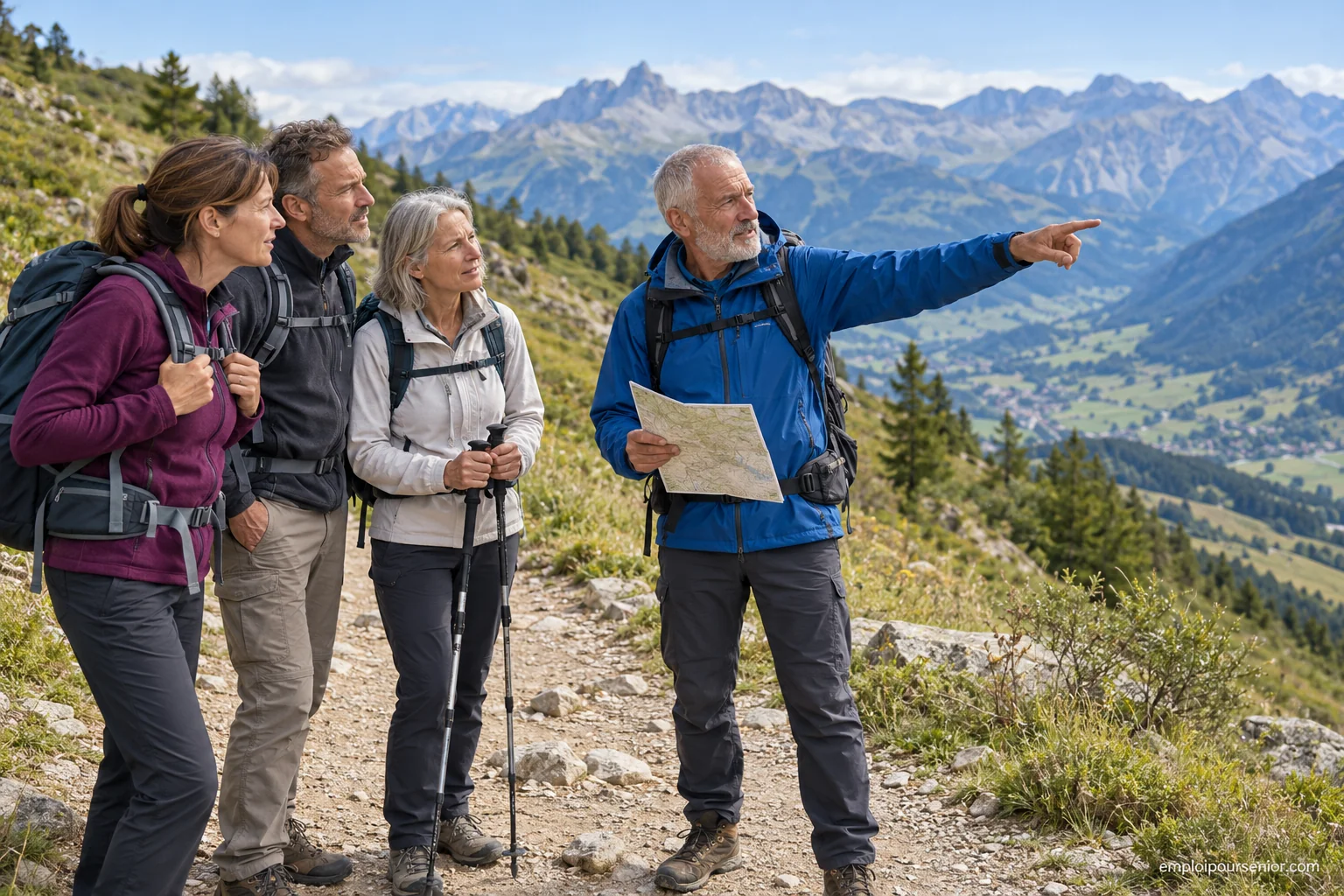
Personal experience is not a regulated profession
Many keen walkers imagine turning their passion into paid work once their career is over. In France, however, leading a walk for payment is reserved for professionals who hold a recognised diploma or title. Thousands of outings made for pleasure do not replace that qualification.
The difference lies in responsibility. A leader chooses a route for a group they may not know well, decides to turn back when the weather demands it, deals with a fall or a medical problem, and answers for those choices. The diploma shows that these skills have been assessed.
Mid-mountain leader or high-mountain guide?
The two jobs are often confused, yet their terrain is quite different.
- The mid-mountain leader (accompagnateur en moyenne montagne) takes people along paths in rural mountain areas, usually on ground without snow. The leader does not work on climbing rock, glaciers or any terrain that calls for mountaineering technique and equipment.
- The high-mountain guide leads ascents and outings on rock, snow, ice or mixed ground, as well as ski touring and off-piste skiing. The training is longer and more demanding.
For a senior project built around walking, nature and heritage, it is almost always the first diploma that applies. The exact entry conditions and course content should be confirmed with the training school or the ministry responsible for sport.
The road to qualification
Training is delivered by public institutions and approved centres. It generally combines modules on the legal framework, the economics of mountain sport, the natural environment, welcoming the public, the physiology of effort, reading weather and terrain, safety and rescue.
Before committing, it helps to do the following:
- find out about entry tests and the medical certificate required;
- compare course formats, which often alternate classroom sessions with placements in real conditions;
- estimate the cost and the funding that may be available according to your situation (jobseeker, employee changing career, retiree);
- meet a working leader to see what the job is like day to day.
There is no shortcut: even a very experienced person must follow the set pathway.
Skills and qualities sought
The job is more than walking in front of a group. It calls for:
- an excellent reading of the terrain: maps, navigation, spotting awkward sections;
- knowledge of mountain weather and how it develops through the day;
- teaching skills suited to children, families or groups of retired people;
- up-to-date first-aid skills and a genuinely calm head;
- local culture: wildlife, plants, geology, pastoral farming, the history of the valleys.
Years spent in other fields, especially teaching, healthcare, activity leadership or team management, are a real plus when it comes to holding a group together, reassuring people and explaining things.
A season, long days and real physical effort
A typical day starts with checking the weather and the equipment, continues with welcoming the group and four to seven hours of walking with breaks, then a return and a debrief. Beforehand, the leader scouts the routes, prepares fallback options and keeps fit.
The work is highly seasonal: summer in the mid-mountains, and sometimes snowshoe outings in winter depending on the area and the qualifications held. Quiet periods go on prospecting, preparation and further training. For someone over 50 the issue is not age in itself but health, stamina and the ability to recover from several long days in a row. A medical check before starting out is plain common sense.
Income and status: do not count on guaranteed volume
Many leaders work independently, often as micro-entrepreneurs or through a company, selling day outings, short breaks or activities for local organisations. Others are seasonal employees of a tourist office, an association or an activity provider.
Earnings vary with the area, the season, the weather, reputation, the price of outings and the number of days worked. No regular number of departures can be guaranteed, and running costs (insurance, equipment, contributions, travel) weigh on the result. A retiree should check the rules on combining a pension with work with the pension fund before starting.
An example project for a former manager who loves walking
Illustrative example. A former sales manager who has been a keen walker for twenty years wants to lead groups in his favourite range. He begins by joining a few outings with a working leader as a participant, to watch how the group is handled.
He then asks a training centre for information, has a medical check, weighs up his budget and decides to enrol on the full course. While waiting for the diploma, he organises unpaid outings for friends in a non-commercial setting, without claiming a title he does not yet hold. This careful progression avoids legal risk and lets him test his enthusiasm before investing more.
Common pitfalls and related ideas
The most frequent mistakes are selling outings without a diploma, underestimating the cost of suitable insurance, overestimating how many departures are possible or starting without a local network. Weather conditions, liability in the event of an accident and rights of way across certain land are also worth checking.
If the diploma does not suit you, other activities draw on the same love of nature: volunteering with a walking association, running workshops on wildlife and plants, welcoming visitors at a mountain hut or tourist office, or waymarking paths with a club. Not all of these are paid, and each has its own rules.
Frequently asked questions
Is there an age limit for becoming a mountain leader?
No general age limit is announced for training, but the entry tests, the medical certificate and the physical demands of the job remain decisive. Ask the training centre directly, as it will explain the conditions in force and any adaptations.
Can I lead friends in the mountains without a diploma?
An outing among friends, with no payment and no commercial activity, counts as personal practice. As soon as money changes hands or an organised service is provided, the rules on supervision apply. Caution is still wise, because liability in the event of an accident can be engaged in some situations.
What is the difference from a high-mountain guide?
The mid-mountain leader works on paths, generally without snow, and does not practise mountaineering. The high-mountain guide is qualified for rock, ice, snow and ski touring. The training, the tests and the areas of work are not the same.
Can the job be done part time?
Yes, many leaders adjust their activity to the season and to how they feel, sometimes alongside another source of income. The number of outings still depends on local demand and the weather, so your budget should not rely on guaranteed volume.
Where can I keep learning once qualified?
Continuing-training centres offer sessions on safety, snow and avalanches, digital route tools, rescue, botany or welcoming particular groups. Dates, places and availability are published on their websites, and professional unions also guide their members.
What insurance is needed?
A professional leader generally takes out liability insurance suited to the activity, sometimes with a personal accident cover on top. Contracts, limits and exclusions differ between insurers, so compare them and, if needed, ask a professional union for advice.