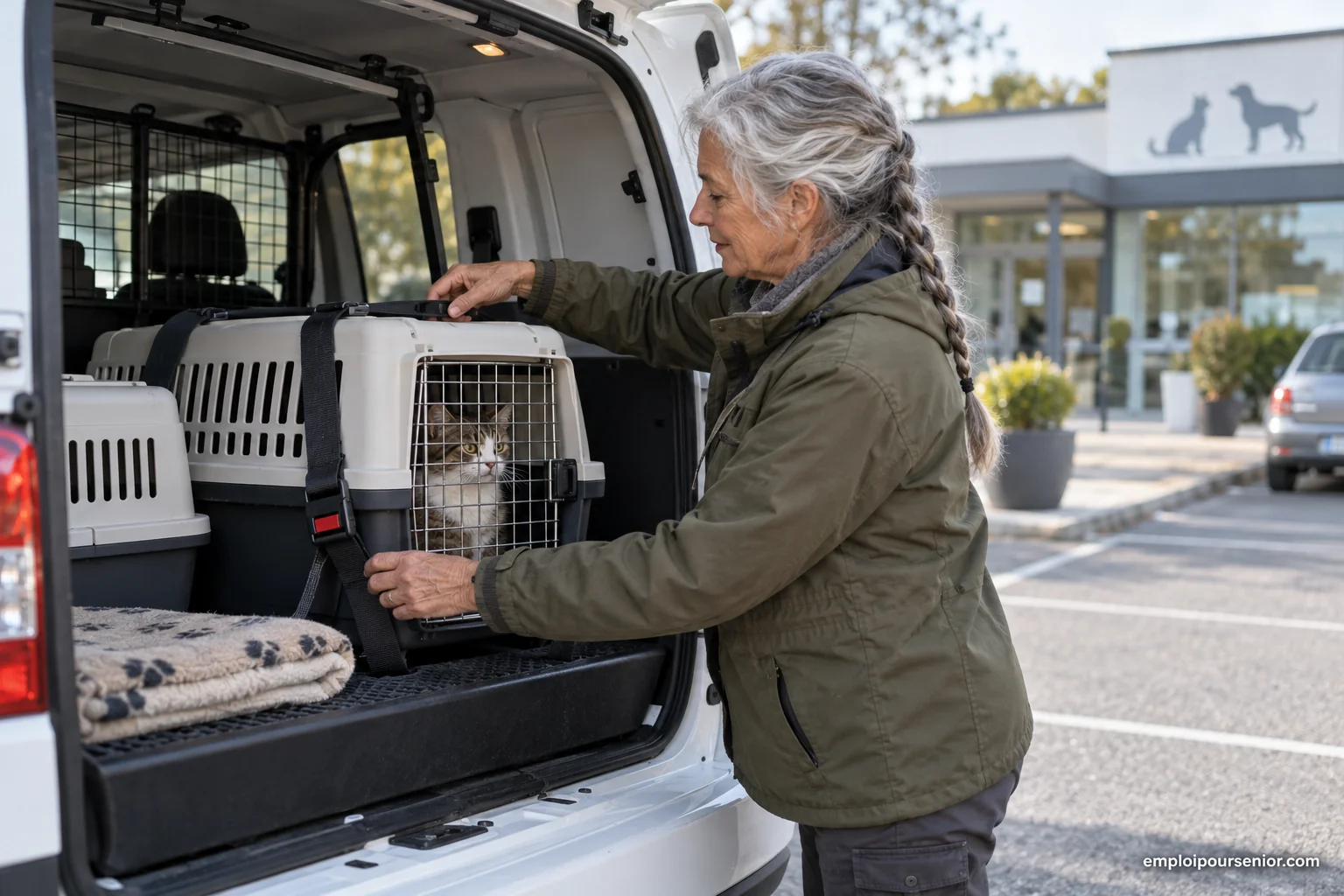
What the pet taxi trade really involves
A pet taxi is a private-hire transporter whose passenger is an animal: most often a dog or cat, sometimes a rabbit, a bird or a new pet moving to another household. The journeys vary: a vet or grooming appointment, going into a boarding kennel, coming home after hospital treatment, delivering an animal that has been sold or adopted, or moving house for an owner who cannot drive themselves.
Contrary to the popular picture, it is not just a car ride with a friendly creature on the back seat. The driver answers for safety, cleanliness, thermal comfort and the stress level of a passenger who can neither speak nor warn you if they feel unwell.
The activity is generally carried out as a self-employed worker, sometimes alongside another structure such as a veterinary clinic, a kennel, an animal welfare charity or a breeder. It is not guaranteed work: the number of trips depends on the area, the season and how visible the service is.
Who this activity can suit
It often appeals to people who love animals, drive without anxiety and want to organise their time freely. A retired person sometimes finds extra income at a pace of their choosing, and a former transport or animal-sector worker a way to put their know-how to use.
A few qualities matter more than others:
- smooth driving, without sudden braking, because an anxious animal copes badly with jolts;
- patience at pick-up, which often takes longer than planned;
- administrative rigour: the animal's papers, identification and the owner's instructions;
- a reassuring manner with owners, who are entrusting a member of the family;
- the ability to stay calm with an animal that panics, bites or vomits.
Affection for animals is useful but not enough: it replaces neither knowledge of animal behaviour nor regulatory preparation.
Regulation and training: what to check before you start
The transport of live animals in a commercial setting is governed by European rules on protecting animals during transport. In France the activity may need prior administrative authorisation and a certificate of competence for drivers, obtained after training specific to the species carried and an assessment. Some agricultural or veterinary qualifications give equivalences.
Training providers usually describe this course as TAV (transport of live animals). Durations, prices and formats vary from one provider to another: some courses are followed remotely, others in person. They are not necessarily equal, and a commercial certificate is not a licence to operate.
The reflex to adopt: contact the departmental office responsible for consumer protection or the regional agriculture directorate (DRAAF), describe the planned activity precisely (species, distances, paid or unpaid transport) and ask which steps apply. Distance thresholds and special cases come from texts that only the competent authority can confirm for a given situation.
Vehicle, equipment and insurance
The vehicle must be able to take animals without risk: a clean, well-ventilated boot or cabin, a non-slip floor, a barrier from the driver and fixing points for crates. Depending on the species, you will need approved or suitably sized carriers, safety harnesses, bowls, fresh water, absorbent pads, cleaning products and something to deal with mess.
Temperature needs constant attention: a vehicle parked in the sun becomes dangerous within minutes. The driver therefore plans breaks in the shade, has reliable air conditioning and never leaves an animal alone in a closed cabin.
On insurance, ask an insurer or broker about cover for the vehicle used for a transport activity, for professional liability and for the animal carried. A personal car policy does not automatically cover this use; get the answer in writing.
Status, rates and how income works
Most pet taxis work as sole traders or micro-businesses. In principle a retiree can combine self-employment with a pension, but the French rules on combining work and retirement, and their possible effects on rights, depend on each person's situation: confirm with your pension fund before you register.
The price of a trip is not just a matter of mileage. A realistic quote includes:
- the outward journey, waiting time and the empty return;
- fuel, vehicle wear, tolls and insurance;
- cleaning and disinfection after the trip;
- special instructions (an elderly, anxious or medicated animal);
- social contributions and training costs spread over time.
No income is guaranteed. The first months are often spent making yourself known to vets, kennels and shelters, by word of mouth and through a local online presence. It is better to think in terms of services invoiced over a year than of expected weekly earnings.
Working rhythm, tiredness and physical precautions
Hours follow those of the owners: early departures for a clinic appointment, returns at the end of the day, holiday weekends. The work can therefore stay light some weeks and concentrate heavily at other times.
Physically, several movements need to be anticipated: lifting crates, settling a large dog, leaning into a boot, holding an animal that is wriggling. A fragile back, painful knees or poor tolerance of allergies (fur, feathers) should be examined honestly. Bites and scratches happen; know where the first-aid instructions are, check with your doctor that vaccinations are up to date and refuse a trip if the animal seems too dangerous to handle.
Driving long distances also requires vigilance: regular breaks, journeys planned with margins and avoiding tiredness at the end of the day.
Steps to get started calmly
- Define your offer: species accepted, area served, short everyday trips or long distances.
- Find out about your obligations from the competent authority and choose a recognised course for the species envisaged.
- Equip the vehicle and test the set-up with a familiar animal before the first trip.
- Choose a status and, if you are retired, check the effect on your pension.
- Take out suitable insurance and keep the paperwork.
- Prepare standard documents: quote, conditions of carriage, an information sheet on the animal, contact details of owner and vet.
- Make yourself known to local professionals.
It is better to proceed in stages than to invest straight away in a converted vehicle. A few trips a month show whether the work really matches what you expect.
A typical day, for illustration
Here is an imaginary day, not to be taken as a promise of work. An independent driver collects an elderly dog from its owner in the morning to take it for a check-up at a clinic twenty kilometres away. They check the harness, lay down an absorbent pad, bring water, wait for the end of the consultation and then take the animal home. In the afternoon they carry two cats from a shelter to adoptive families, each in its own secured carrier.
In between, they clean the cabin, enter their invoices and answer requests for quotes. The day takes about six to seven hours, less than half of it at the wheel. There may also be no trips at all on some days: the regularity of the order book is the main challenge.
Common pitfalls and close alternatives
The most frequent mistakes come from insufficient preparation:
- believing an online course is enough without checking the exact obligation that applies;
- underestimating the waiting time and the return trip in the price asked;
- accepting a trip with an unidentified animal or without proper health documents;
- carrying several animals together without agreement and without separation;
- forgetting the tiredness of a day with many kilometres.
To test your taste for the work without committing, there are alternatives: volunteering with a shelter to carry out animal transfers, accompanying animals on foot (walks, visits), home pet-sitting, or a job in a veterinary clinic or kennel. These routes give experience and a network of contacts, useful if you later decide to set up as a transporter.
Frequently asked questions
Do I need training to carry pets professionally?
In a commercial setting, specific training and a certificate of competence may be required, depending on the species, the distance and the nature of the activity. Some qualifications give equivalences. The safest course is to ask the DRAAF or the departmental consumer-protection office before spending on equipment or training.
Can I become a pet taxi driver when I am already retired?
In principle nothing prevents a retired person from starting a self-employed activity, but the French rules on combining work and retirement vary according to the scheme and the age of leaving. Ask your pension fund before you register, to learn the possible effect on your pension and contributions.
What vehicle do I need?
A clean, ventilated vehicle with suitable carriers or harnesses, fixing points and a barrier from the driver. The size depends on the animals carried: a large dog needs a different set-up from a cat. Your insurer must confirm that the vehicle is covered for this professional use.
How much can a pet taxi earn?
No reliable figure can be promised: income depends on the area, the number of trips, the distances and the costs. You have to deduct fuel, insurance, maintenance, contributions and waiting time. A standard quote and a cautious forecast budget are worth more than the claims of training adverts.
Is the work compatible with back or joint problems?
It depends on the kind of trips. Lifting a crate or settling a large dog puts a strain on the back and shoulders. An occupational doctor or your GP can help you judge which movements are feasible. Limiting yourself to small animals or animals that climb in by themselves can reduce the effort.
How do I find my first customers?
First contacts often come from vets, kennels, shelters and breeders in your area, as well as word of mouth. A clear presentation sheet, transparent prices and reviews from satisfied customers reassure people. Matching platforms exist but do not ensure a steady volume of work.