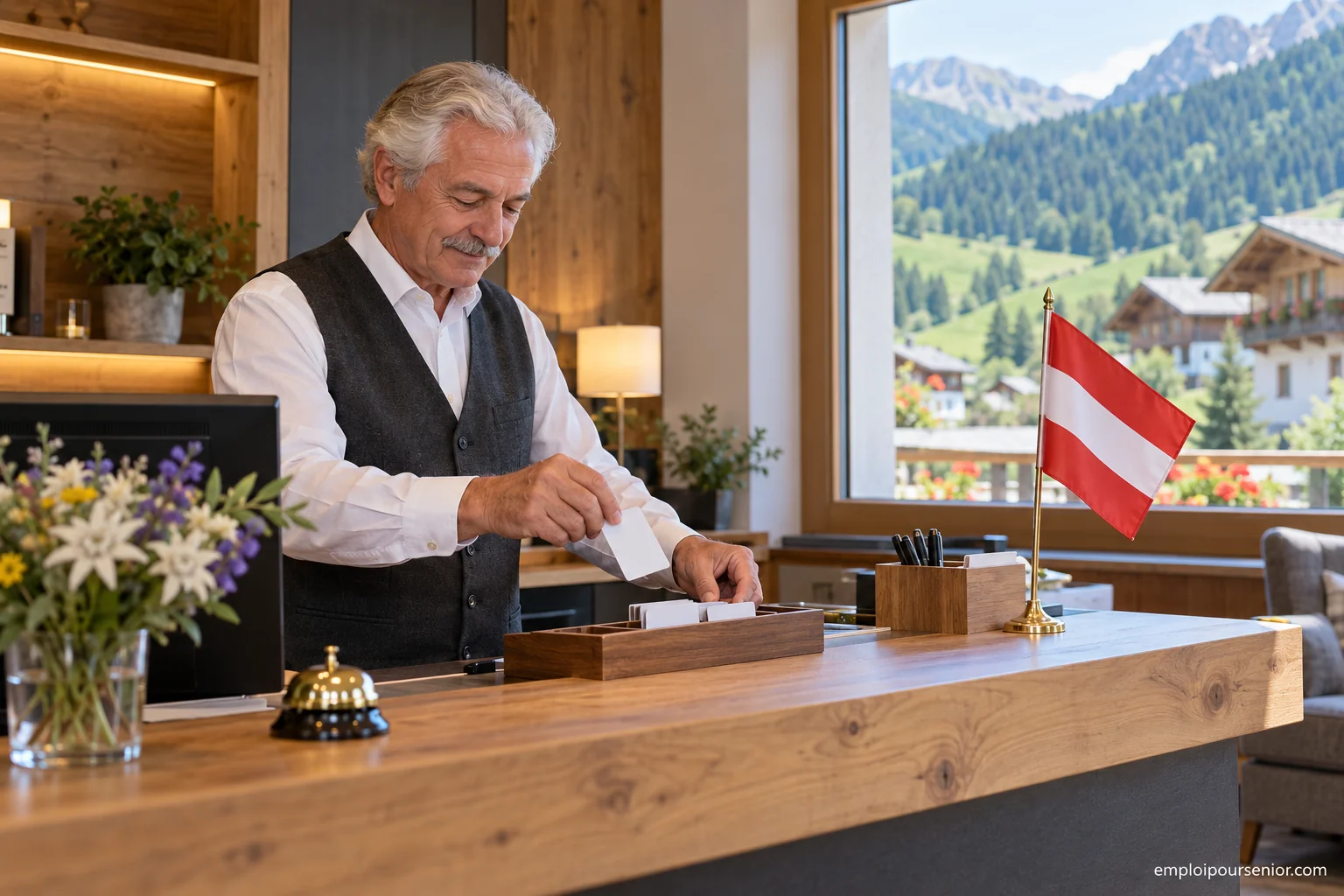
Search at the level of a Land and a trade
Austria has nine Länder with quite different economies: Vienna concentrates services, administration and health care, Tyrol and Salzburg live largely from tourism, while Styria and Upper Austria rely on industry and crafts. An effective search therefore starts with a region and a trade rather than with a single advert.
Learn the local job titles: the same reception post may be called Rezeptionist, Empfangsmitarbeiter or Hotelfachkraft depending on the business. Compare the listed tasks with your own experience, then note what you can genuinely explain, write or teach in German.
Language: Austrian German and its nuances
The working language is German, with vocabulary and accent differences specific to Austria. In hospitality, English and sometimes French are appreciated as extras, but they do not excuse you from understanding instructions and the local guests and colleagues around you.
For reception, administration or technical hand-over, be precise about your real level. Conversational German is sometimes enough for a seasonal reception post, whereas office work requires correct writing. Mention any classes you are taking: employers read this as a sign of motivation.
Pension and work: what partial retirement changes
The Austrian pension system distinguishes several types of pension. Since the start of 2026, according to official information, a partial pension allows you to reduce your working time within a set range and draw part of your pension, provided the employer agrees in writing and your pay stays above the marginal-employment threshold.
Continuing to work beyond the statutory retirement age also generally opens the door to pension supplements. The exact conditions depend on the type of pension, your year of birth and your individual pension account, and should be checked with the competent fund before you decide.
With a foreign pension, for example a French one, it is your home fund that tells you how Austrian income is taken into account. Having a pension never replaces checking your right of residence and work.
Contracts: employee, marginal, self-employed
Three forms come up most often. The standard employment contract, full-time or part-time, offers the most protective framework. Marginal employment, capped by a monthly threshold that changes over time, is an option for light activity. Self-employment, for instance in consulting, training or crafts, requires you to register and to come under a specific social security scheme.
Whichever option you choose, ask for the contract in writing, stating the duration, hours, pay, leave and the terms of termination. Sector-wide collective agreements exist in Austria and often set minimum pay: ask which one applies to the job.
Search channels: public service, 45+ platforms and networks
The public employment service, the AMS, publishes vacancies, provides information on hiring subsidies for older workers and offers advice to jobseekers over 50. Rights there are, however, tied to being a resident and an insured person.
Private platforms complete the picture: the Senior Quality job platform, designed for candidates aged 45 and over, presents employers open to experienced profiles, and the big job boards have sections for pensioners. Care and home-help organisations, such as the Red Cross, also recruit retirees for part-time posts.
Seasonality, housing and the pitfalls of tourism offers
In mountain resorts, an attractive post can hide a demanding routine: split shifts, weekend work, a sharp winter peak and housing tied to the contract. Ask separately about the housing terms, the amount deducted from your pay, the length of the season and whether it can be renewed.
Quiet periods limit annual income and can raise questions about social protection. A senior who wants to live in one place for a full year should therefore compare several seasons, or combine a seasonal job with a steadier one in the valley.
- Ask for a written description of tasks and working hours.
- Have it spelled out who pays for housing and meals.
- Check the transport to the workplace in the low season.
Presenting an availability you can sustain
A short file is easier to read than a long story: recent skills, references, the amount of work you want. State the schedule that suits you, the periods when you are unavailable and any flexibility you can offer.
Say too what you can pass on: training apprentices, welcoming foreign guests, quality follow-up, managing bookings. A valued senior is not just someone who fills a post; it is a colleague who makes the team steadier.
Finally, mention your ability to learn digital tools, without overstating it. Many small businesses use booking or rota software that has to be mastered within a few weeks, so a realistic statement serves you better than a bold one.
Working rhythm, health and everyday life on site
A reception or service job can seem light, but it means standing for long periods, carrying luggage or working late. Assess your stamina honestly and ask whether the post provides regular breaks, a fair rota for weekends and cover when you are tired.
Life at altitude, long winters and the distances between villages also shape everyday quality of life: access to a doctor, transport, shops. A trial stay of a few weeks before a lasting commitment spares many regrets.
Lastly, check which health cover applies to your situation. For a resident, enrolment generally goes through the employer; for someone who keeps a home abroad, the coordination rules between countries should be confirmed with your health insurance fund.
Example of an approach for a guesthouse reception job
Take a 62-year-old former branch manager who wants to work a few months at the reception of a small business in Carinthia. She shortlists three establishments, notes the skills they ask for, prepares a short file in German and offers a trial of a few days.
She asks in writing about hours, housing and pay, then asks her pension fund about the effect of Austrian income. Only after this check does she accept the offer.
This is an illustration, not a guarantee: offers, conditions and rights vary from year to year, region to region and person to person.
Frequently asked questions
Can I combine a pension and a job in Austria?
It depends on the type of pension and your age. A partial pension has existed since 2026 under conditions, and working beyond the statutory age generally brings supplements. The precise rules should be checked with the Austrian fund or, for a foreign pension, with your home fund.
Is German essential?
In most jobs, yes, at least to follow instructions and talk with colleagues. In tourism, foreign languages are an extra asset but rarely a substitute. State your real level in your file and explain how you plan to strengthen it.
Which sectors welcome seniors most readily?
Reception services, tourism, home help and care, crafts and training recruit regularly, depending on region and season. No sector is guaranteed: compare several adverts, ask for the exact tasks and check the working hours before you commit.
How can I avoid a nasty surprise with housing tied to the job?
Ask in writing for the price of the accommodation, what is deducted from your pay, how long it is provided and what happens if the contract ends. Visit before signing if you can. Very attractive housing can offset a modest salary, but it should stay negotiable and clearly stated.
Should I register with the AMS?
That depends on your situation: resident in Austria, jobseeker, or someone living abroad. The public service offers vacancies and advice, but the related rights require a precise status. Read its dedicated page before assuming that you have access.
Is seasonal work compatible with settling for the long term?
It can be, provided you plan for the quiet months. Some seniors string a summer season and a winter season together; others combine a seasonal post with a steadier activity. Work out your income over the whole year and check what is provided for housing outside the season.