What reception work in a cultural venue really involves
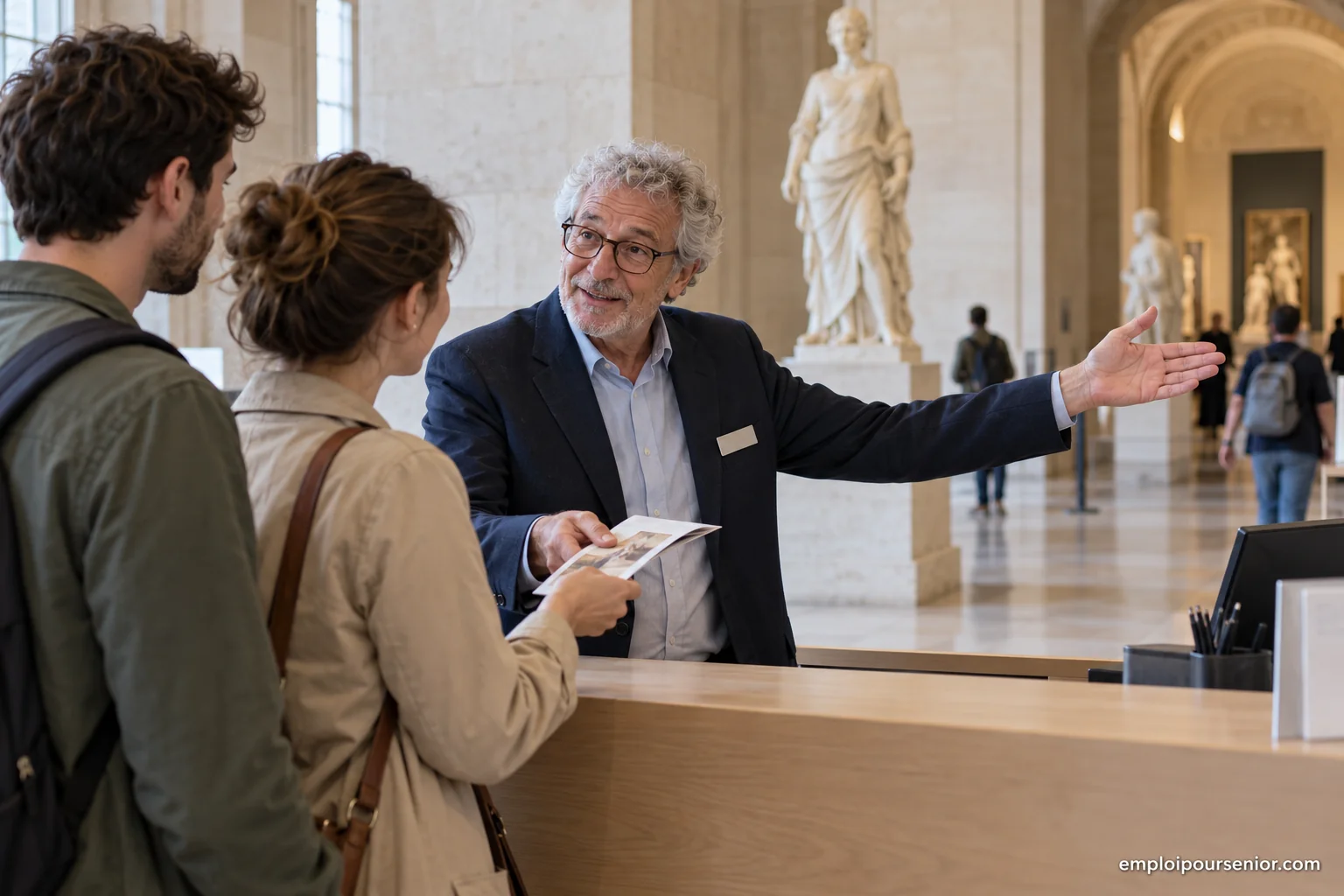
The phrase “visitor welcome officer” covers quite different jobs from one venue to the next. In a museum or historic monument, the person at the entrance explains opening times, ticket prices, routes through the building and the facilities on offer: cloakroom, toilets, shop, lifts. They also pass on the house rules, such as the ban on touching exhibits or the restrictions on large bags.
Depending on the organisation, the role comes with neighbouring tasks: running a ticket desk, checking tickets, counting admissions, helping to organise school parties or tour groups. In some public institutions the job title bundles several functions together, for example welcome, visitor engagement and gallery supervision. It is therefore essential to read a job advert to the end to see what is truly being asked of you.
Why this work can suit people over 50
A museum audience is mixed: families, school classes, tour groups, foreign tourists, elderly visitors and people with disabilities. Someone with experience of dealing with the public, whether from retail, teaching, administration, banking or hospitality, will quickly feel at home.
The qualities employers value most are these:
- a tidy appearance and a calm tone, even when the queue is getting longer;
- the ability to repeat the same information, with the same patience, many times a day;
- a good eye for detail, so you notice a disoriented visitor or an unusual situation;
- punctuality and reliability, because opening hours cannot be pushed back;
- enough fluency in a foreign language, usually English and sometimes another one depending on the visitor profile.
An interest in history or art helps, but it does not replace these basics. A recruiter is looking first of all for someone dependable and friendly.
Welcome, interpretation, gallery security: do not mix them up
These three functions often sit side by side, yet they are not the same job.
Welcome
This means receiving people, informing them and pointing them in the right direction. It does not call for scholarly knowledge of the collections, but it does require a solid grasp of the practical details of the site.
Interpretation and mediation
The aim here is to help visitors understand the works or the place: guided tours, workshops, activities. It often requires training in art history, heritage or teaching, and it is usually handled by separate teams.
Gallery supervision
This protects the collections and the visitors: presence in the rooms, vigilance, enforcement of safety instructions. In large public institutions it is carried out by dedicated staff who have their own recruitment routes. Before applying, find out which of the three functions dominates in the post you are looking at.
Where the jobs are and how they are advertised
Recruitment goes through several channels. In France, national bodies such as the Centre des monuments nationaux or the Louvre post their needs on their own recruitment pages. They employ some civil servants and contract staff, which means specific procedures and sometimes quite long waiting times.
Private operators that run cultural sites, such as Culturespaces, hire under ordinary employment law, using fixed-term or permanent contracts. Municipal, county-level and charity-run museums publish their vacancies through their local authority, through the public employment service France Travail, or on their own website.
It is also common for venues to use contractors or staffing companies that place their employees in cultural sites. In that case your employer is the contractor, not the museum itself, and it is worth asking the question at the very first conversation.
Working pattern, standing and opening hours
A museum opens when the public is free: weekends, bank holidays, school holidays, and sometimes late openings or evening events. Rotas often mix weekdays and weekend days, with rest days that do not always fall on a Saturday and Sunday. That pattern suits some people, for instance a retired person who does not want to work full time, and puts off others.
Standing or shuffling about is common, especially at the entrance. Venues generally rotate staff between posts, for example between the welcome desk, the ticket office and the galleries, but this varies. Old monuments can have staircases, draughts and rooms that are cold in winter. It is sensible to ask about the real working conditions and to ask for a look around the building before you commit.
Status, contract and pay: the right questions to ask
What you earn depends on the type of contract, the hours worked and the collective agreement that applies. No figure should be treated as certain until it appears in the advert or in the contract. These are the points to check:
- the type of contract (seasonal fixed term, cover contract, permanent, casual sessions) and its expected length;
- the number of hours per week and how the rota is communicated;
- the hourly or monthly pay and any premium for Sundays or public holidays;
- who the employer is: the site itself or a contractor;
- the initial training provided, in particular on safety and evacuating the public.
For someone who has already retired, going back to work falls under the French rules on combining employment with a pension. These depend on the pension scheme and on personal circumstances, so contacting your pension fund before signing avoids unpleasant surprises.
Putting together a credible application
A short CV centred on experience of dealing with the public works better than a long list of old jobs. It is wiser to highlight concrete situations: managing a queue, handling an unhappy customer, giving information in several languages, helping an elderly person or someone in a wheelchair.
A few simple habits increase your chances of being heard:
- visit the place as an ordinary visitor and watch how people move, where they get stuck and what they ask;
- state precisely which languages you speak and your true level;
- spell out your availability, especially for weekends and bank holidays;
- send a brief speculative application to the welcome managers when no vacancy is open.
In the French civil service, applications sometimes follow a set format and a strict deadline, and you have to comply to the letter.
A sample day, to picture the job
As an illustration, here is one possible day at a monument open to the public. The attendant arrives before opening and reads the day's instructions: building works, temporary exhibitions, groups expected. They set out the visitor maps, check that the welcome equipment is working and make sure access routes are clear.
When the doors open, they greet the first visitors, answer questions about the route, point out closed areas and direct families to suitable facilities. Around midday they may cover a colleague at the ticket desk or walk a school group to its meeting point. At the end of the day they report any incidents, tidy the desk and pass useful information to the next team. None of this is universal: every venue organises things in its own way.
Similar jobs if this one is not for you
If museum work seems too restrictive, other welcome-type jobs rely on similar qualities. A theatre usher or steward works shorter evening shifts. A corporate or event hosting role takes place in a more business-like setting. A local guide or a ticket checker at a one-off event adds other tasks.
These options come with conditions different from a museum's, which you should compare case by case: number of hours, travel, type of public, length of the working day. Each can be tried first through a short assignment before you consider a longer commitment.
Frequently asked questions
Do I need a qualification to work on a museum reception desk?
Generally no specific qualification is required for simple reception work, but employers expect a smart appearance, courtesy and often a foreign language. Interpretation and mediation roles tend to ask for training in heritage or art history. Requirements differ from one venue to another, so the job advert remains the reference and should be read carefully.
Can a retired person be hired as a visitor welcome officer?
In principle nothing prevents a retired person from taking paid work again, provided they respect the French rules on combining employment and a pension, which depend on the scheme and on each person's situation. Civil service posts have their own recruitment and pay rules. It is best to ask your pension fund before signing anything.
Are the contracts mostly seasonal or permanent?
Both exist. Sites that are very busy in summer often hire for the season, while other venues open year-round posts or cover contracts. Public and private operators do not work in the same way. Before committing, check the planned duration, the number of hours and whether renewal is possible.
Is it possible to work just a few days a week?
Some organisations offer part-time hours, casual sessions or cover for a few days, notably to staff weekends and peak visitor periods. It depends on the venue's needs and the kind of contract. It helps to state your availability clearly in your application rather than trying to negotiate it once the rota has been fixed.
What is the difference between reception and gallery supervision?
Reception means informing and directing visitors, whereas supervision protects the collections and enforces safety rules in the rooms. In many public institutions both functions are combined in a single post, sometimes with mediation as well. The job title and the job description will tell you what is expected of you.
Is the work physically tiring?
The job often involves standing, walking through large spaces and sometimes climbing stairs. How demanding it is depends on the venue, the season and the day's assignment. It is perfectly reasonable to ask whether staff rotate between posts or whether there are moments to sit, and to visit the site before deciding if the pace suits you.