What a vehicle delivery driver actually does
Delivering a vehicle means collecting it from a customer or a car park, driving it to its destination and handing it over in good condition, with the papers and the keys. The people who give the orders are varied: car rental companies, dealerships, manufacturers, leasing firms, and also private individuals who are selling a car or moving house.
The job is not only about driving. It also includes:
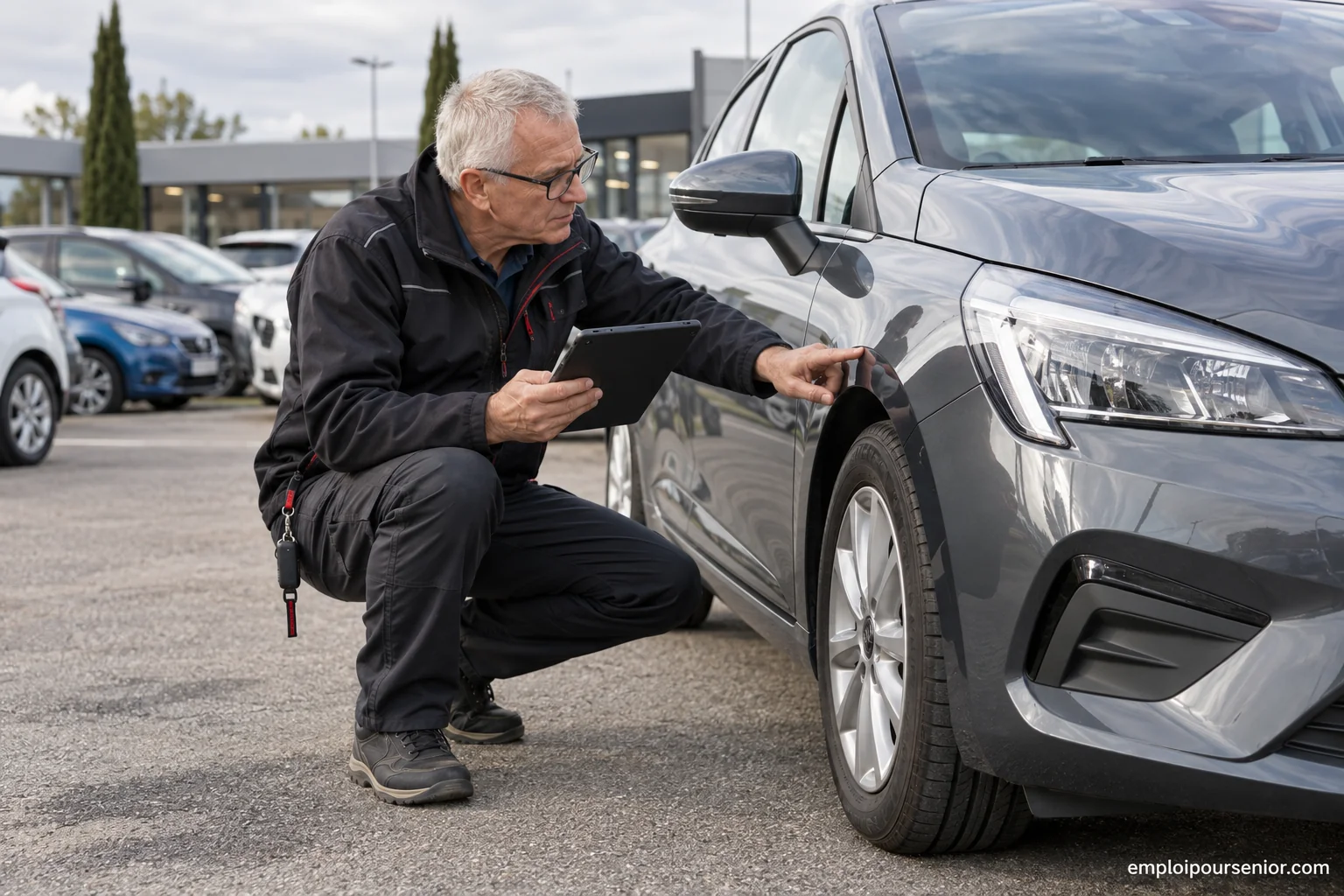
- a detailed condition report at the start, with photographs, mileage and fuel or charge level;
- keeping to a delivery deadline, sometimes a precise time slot;
- handing the car to the recipient, occasionally with a few words on its equipment;
- a second condition report on arrival, signed or confirmed in the app.
This paper trail protects the driver: damage that was not recorded at the start can be blamed on the driver at the end.
Why experienced older drivers are drawn to it
For someone who has driven for decades, the idea is simple: put to use an ease behind the wheel, a sense of punctuality and a liking for the road. The freedom to organise your own time also appeals, since you normally choose which jobs to take, without hours fixed in advance.
It suits people who enjoy:
- driving very different vehicles, from a city car to a van;
- handling their own travel and unexpected problems;
- using a smartphone for photos, signatures and tracking each job;
- working in bursts, with no fixed weekly commitment.
On the other hand, this flexibility should not be mistaken for a regular income. The volume of jobs depends on the region, the season and demand, and nothing ensures that one assignment will follow another without a gap.
Self-employed status: what the platforms ask for
The best-known delivery platforms in France work with independent drivers rather than employees. The recruitment pages we looked at generally ask for sole-trader status (a micro-business, for example) or a company, with a business registration number known as a Siret.
Other criteria vary from one platform to the next:
- a minimum age, often 21 or 25;
- a full car licence held for some years, three to five depending on the case;
- a recent smartphone and a way of printing documents;
- documents to supply: ID, proof of business status, bank details and sometimes a profile photo;
- a validation stage, which may include a questionnaire or a simulated condition report, followed by the signing of a service contract.
No obvious upper age limit appears in these conditions, but each platform remains free to set its own criteria. Read the page of each company before signing up.
Retirement and self-employment: a point to check
A retiree who becomes self-employed is combining an activity with a pension. Depending on the situation, that combination may be unrestricted or capped, and setting up a micro-business affects contributions and possibly tax and VAT.
Before starting, it is sensible to ask yourself a few questions:
- has my pension been claimed from every scheme, and at the full rate?
- is combining it with work free, or subject to an income ceiling?
- do the contributions paid on this activity build new entitlements?
- will the activity affect any benefit or allowance I receive?
These points are settled with the pension fund and the relevant authority in France, not on the strength of a general article. A conversation beforehand avoids painful adjustments later.
The true cost of a job: expenses, waiting and the return trip
The price displayed for a job reflects only part of the time spent. To know whether it is worth it, you have to count the whole day.
Before the delivery
Getting to the starting point can take long, especially if the car is in an area far from home. Waiting for the customer, or taking the photographs, adds time spent not driving.
After the delivery
The way back is often forgotten: train, coach, car share, folding bike. A distant station, a missed connection or an early last train can turn a profitable job into a wasted day. Some companies cover part of the approved expenses; others do not.
A simple rule is to divide the price by the total number of hours, from leaving your front door to getting back, then subtract any unreimbursed costs before deciding.
Insurance, breakdown, accident: questions to ask before setting off
Driving a vehicle that is not yours carries real responsibility. Before accepting a job, it helps to know what is covered and within what limits.
- What insurance protects the vehicle during the delivery, and what excess, if any, remains payable by the driver?
- What does the procedure say if there is a breakdown, a puncture or an accident: assistance number, recovery, accommodation?
- Who pays tolls, fuel and charging for an electric car?
- How are fines or offences committed during the journey handled?
This information should appear in the service contract and in the platform's terms and conditions. It is better to read them before the first job than at the roadside. Personal professional cover can also be discussed with a broker.
Fitness, fatigue and safety at the wheel
Delivery driving is not physically heavy, but it tires you in another way: prolonged concentration, switching between vehicles, driving in unfamiliar regions, sometimes at night or in the rain. Getting used to an unknown car takes a few minutes: adjusting the seat and mirrors and locating the controls.
A few habits help you stay careful:
- plan regular breaks on long journeys;
- refuse a job that means driving late after an already full day;
- have your eyesight, hearing and reaction times checked by your doctor;
- carry food and something to drink.
A job of several hundred kilometres followed by a return on public transport can add up to a twelve-hour day. It is wiser to begin with short trips to gauge your own stamina.
Example: comparing two jobs before choosing
Suppose two offers appear in an app. The first is a medium-length trip, starting in a town centre and ending near a railway station. The second is shorter, but heads for a poorly served rural area.
The first seems to pay less, yet the return by train is direct and quick. The second looks more attractive, except that only one bus a day serves the arrival point: getting back means a long wait or a taxi at the driver's expense.
Comparing total time, return costs and tiredness, the first job may turn out better. This reasoning, valid for any trip, stops you choosing on the displayed price alone. The example is illustrative and matches no real rate.
Alternatives and complements to delivery driving
If self-employed delivery work does not suit you, other activities also value driving skills and a service mindset:
- school-run or passenger-transport driving, with specific training and a medical fitness check;
- home meal delivery, which is more regular and more personal;
- local deliveries for a neighbourhood shop;
- valet driving for a garage or dealership, moving vehicles over short distances;
- employed work with a vehicle hire company.
Each has its own rules on status, insurance and hours. Some older people combine a little delivery driving with a more regular activity in order to smooth out income and keep a predictable routine.
Frequently asked questions
Do I have to be self-employed to deliver vehicles?
On the large delivery platforms, yes: drivers generally work as independent contractors under a status such as the micro-business. Some rental firms and dealers do, however, employ staff to move their vehicles. In every case, how you are paid and what insurance applies should be read in the contract before you begin.
Is there an upper age limit for becoming a delivery driver?
The recruitment pages we consulted mostly mention a minimum age and a length of time holding a licence, not a maximum age. Each organisation sets its own rules, though, and the vehicle's insurance may impose criteria. Ask directly, and check with your doctor that you are fit to drive for long periods.
Is the journey back paid?
It depends on the platform and the job. Certain approved expenses, such as a train ticket, may be refunded under precise conditions; others are not. The return time itself is generally not paid as such. You should therefore include it in your calculation before accepting a job, especially if the destination is poorly served.
Can you live on delivery driving alone?
No platform guarantees a regular volume of jobs, which varies with the seasons, the regions and competition between drivers. For a retiree, delivery driving is more of a supplement to a pension. Before devoting yourself to it, try the activity on a few jobs and compare net income with all the time it takes.
What should I do if damage appears during the trip?
Stop somewhere safe, take photographs, tell the assistance service named by the platform straight away and follow its procedure. Never play the incident down or hide it. A full condition report at the start helps distinguish existing damage from damage that happened on the road. The contract states any excess payable.
What equipment do I need to get started?
A recent smartphone with enough battery for the whole job, a car charger, identity documents, your licence and the platform's paperwork are usually enough. Some companies also ask for a means of printing documents. Comfortable shoes and a waterproof jacket are useful for the way back on foot or by public transport.