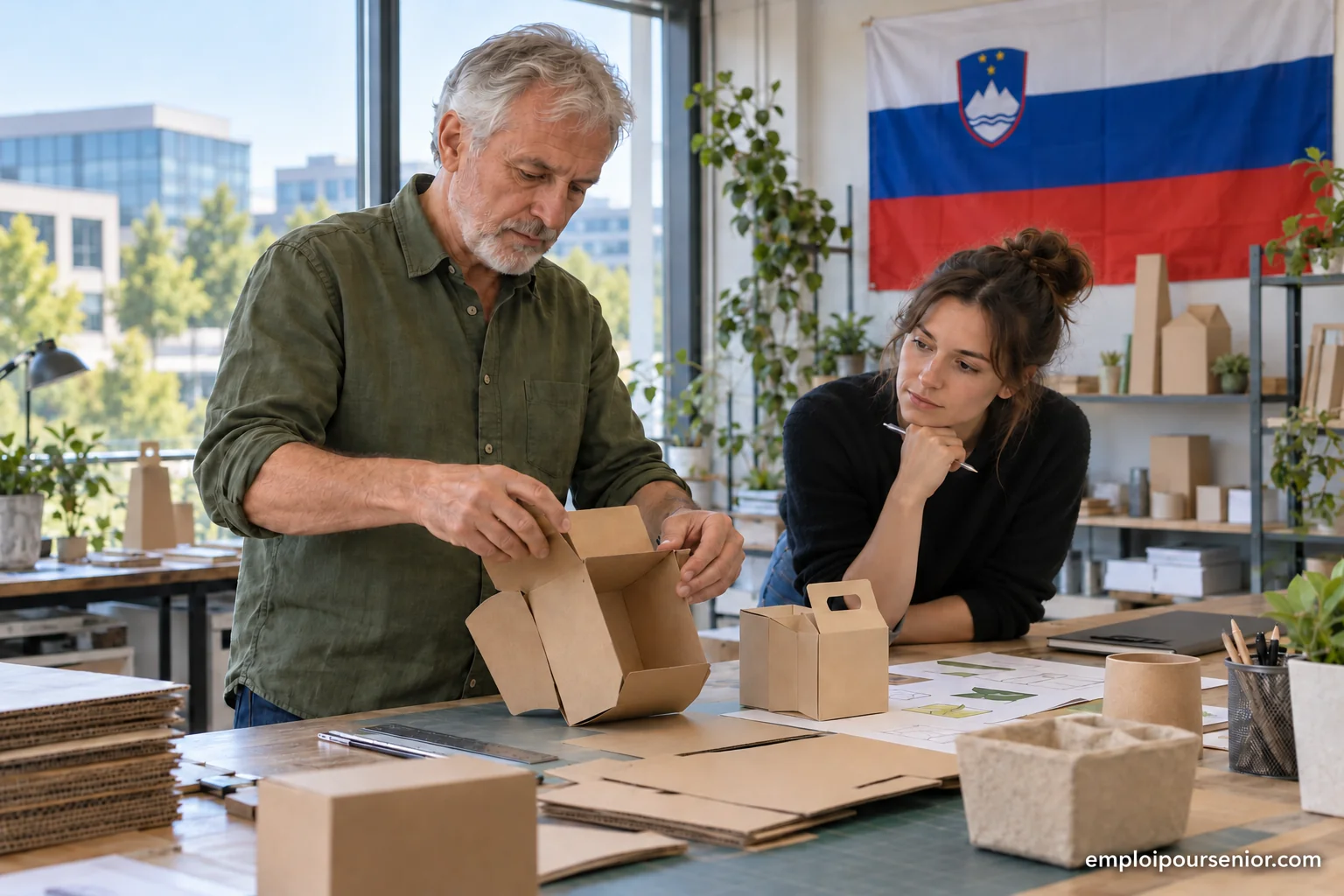
A small market with industrial and tourism niches
Slovenia has around two million inhabitants and an economy made up of many medium-sized firms. Manufacturing, car-parts makers, pharmaceuticals, metalworking, energy and timber all carry weight. The port of Koper anchors logistics, while the coast, the Julian Alps and the spa towns support seasonal tourism.
For a senior, this landscape offers openings in technical posts, first-line supervision, quality, documentation and the passing on of know-how. The market is nevertheless narrow: few adverts per sector and a lot of hiring through local networks. A precise application aimed at an identified need is more likely to be read than a general file.
Free movement and residence formalities
Slovenia is a member of the European Union and of the euro area. Citizens of France, Belgium, Luxembourg or Germany can in principle look for work and take a job there without a work permit. For a stay of more than three months, registration with the local authorities is generally required, together with proof of employment or income and health cover.
People who are not EU citizens look into a residence permit linked to employment, often with an employer who starts the procedure. The rules change regularly; the information portal for foreigners is a sensible starting point before any step, to be followed by contact with the competent administration.
Pension and work: two systems to fit together
When a person already draws a pension from another country, that pension remains governed by the rules of the scheme it comes from. Combining it with a Slovenian salary may depend on earnings ceilings, reporting duties or a tax adjustment. No general rule can be stated without knowing the paying country, the type of pension and the working status.
- Ask the original pension fund whether work abroad has to be declared.
- Check with the Slovenian authorities where contributions are due for the planned job.
- Find out about the tax treaty between the two countries.
The Slovenian system itself provides gradual-retirement options for its own insured people, such as a partial pension combined with reduced working time. Their conditions, to be confirmed with the national pension insurance institute, do not automatically apply to foreigners.
Slovene: the key to working life
Slovene is the official working language, and technical exchanges, internal documents and contracts are generally written in it. Many Slovenes speak good English, and often German or Italian depending on the region. Those languages ease a first contact but do not replace the local language for a lasting post.
Situations accessible without Slovene are mostly in training, export support, translation or work with French-speaking or tourist customers. Adult language courses, offered by schools and integration programmes, run at several levels. Stating your level honestly on your CV avoids misunderstandings at interview.
Offering a contribution rather than just a profile
In a small market, an application that starts from a concrete problem stands out. Rather than describing thirty years of career, it is helpful to propose a precise result: improving a packaging line, documenting an inspection procedure, preparing a manual for a new machine or supporting the arrival of a management software package.
- Name the need you are aiming at, for example fewer rejects or better traceability.
- Describe the skills involved and the tools you master.
- Indicate the length of the assignment and the time you can be present, without overstating availability.
- Say in which language the work can be done.
Nothing guarantees that a company has this need: the approach serves to target your efforts, not to presume a reply.
Employee, outside contributor or self-employed
Before offering a few days of work, you need to know what form the collaboration will take. A standard employment contract, fixed-term or permanent, brings the employee's social protection. A service contract, comparable to a one-off assignment, follows a different contribution logic. Sole-trader status is possible but means registering and keeping accounts.
A senior who wants to work only a few hours a week should ask whether part-time work is accepted and how holidays, public holidays and sick leave are handled. A confidentiality or non-competition clause may also appear in the contract. Having the text read by a professional or an advice service remains a reasonable precaution, especially when it is written in Slovene.
Search tools and local support
The public employment service publishes vacancies, runs job-search workshops and points people to career information centres. Job portals and recruitment agencies complete the picture. Retired people's associations, which bring together many local societies, also offer activities, practical information and useful contacts for understanding the country's social life.
For new arrivals, an information portal devoted to foreigners explains the steps for residence, work, schooling and integration. Personal networks count for a lot: a former colleague, a chamber of commerce or a professional association can introduce the right person in a small company.
An example of how to proceed
As an illustration, a former packaging manager who has recently settled near Ljubljana wants to keep working two days a week. She identifies consumer-goods manufacturers in her area, prepares a one-page sheet describing a packaging audit and presents it first in English.
She asks whether the company wants a part-time employee or an external contributor, then finds out about the corresponding social regime and about declaring her activity to her original pension fund. A trial period of a few weeks lets her test the work organisation and the daily commute. This path remains an illustration: it assumes neither that a post exists nor what income might be possible.
Points of caution
Several things deserve careful attention. Recognition of qualifications mainly concerns regulated professions such as health, teaching or some technical trades; it goes through competent authorities and may require translations. The cost of housing, particularly in Ljubljana, weighs on the budget of a part-time activity.
On the health side, a post in a workshop or on a building site demands good physical condition, and medical cover must be in place from the start of the stay. Finally, it is wise to be wary of intermediaries who demand fees to find a job. Public bodies and recognised agencies provide their services without asking the candidate to pay.
Frequently asked questions
Can an EU citizen work in Slovenia without a visa?
Yes, in principle, since Slovenia is an EU member state. A European citizen can look for work and take a job without a specific permit. For a stay of over three months, registration with the local administration is usually required. Check the current conditions before you leave.
Can you combine a foreign pension with a job in Slovenia?
It depends first on the scheme that pays the pension. Some set no limit, others require a declaration or cap earnings from work. Taxation of both incomes also falls under a treaty between countries. It is therefore advisable to question your pension fund and the tax authority before signing a contract.
Is Slovene essential?
For a lasting post in a company it is widely expected. English or German may be enough for a first contact and for some international, tourism or training roles. Learning the basics of Slovene makes an application more credible and simplifies everyday formalities.
Which form of collaboration suits a few days a week?
The choice depends on the company and on the person's status. Part-time employment gives standard social protection; an external service contract leaves more autonomy but involves other contributions and invoicing. It is better to ask the employer what it accepts, then check the social and tax consequences of each option.
Where can you find job vacancies?
Vacancies are published by the public employment service, by job portals and by recruitment agencies. Companies also post jobs on their own sites. For an experienced profile, direct contact with a workshop or department manager, backed by a short document, often brings a more useful answer.
Are foreign diplomas recognised?
For most non-regulated jobs, the employer values experience and demonstrated skills above all. For a regulated profession, recognition goes through the national authority concerned, with documents that sometimes need translating. Delays and requirements vary; start early and keep proof of your career.