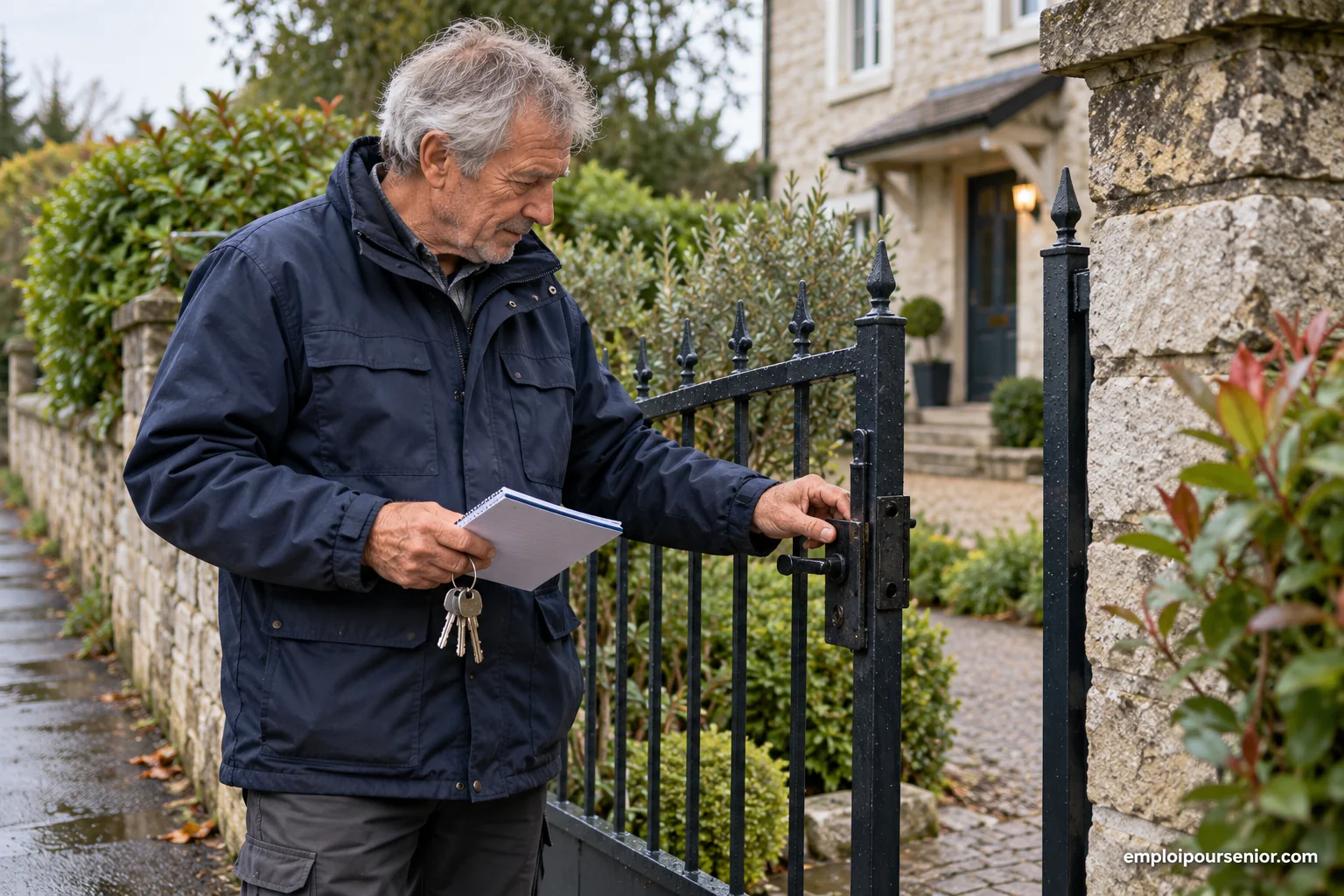
Caretaking, house-sitting, estate management: what are we talking about?
The word "caretaking" (gardiennage in French) covers varied realities. It may mean watching over a second home while the owners are away, moving into a property for a few days or weeks to provide a presence, maintaining an estate, or running a lodge or caretaker's post in a residential complex.
House-sitting refers more to a temporary presence in someone else's home, often during their holidays, with watering plants, collecting post, opening shutters and sometimes looking after a pet. Estate management goes further: it includes preparing the house before the owners arrive, managing contractors or putting the place right after a holiday let.
Each formula involves different responsibilities, hours and status. Mixing them up leads to misunderstandings.
Above all, a job of trust
The caretaker holds the keys, sometimes the alarm code, and knows the habits of the house. Owners therefore expect discretion, reliability and great honesty. Experience, references and a stable profile often count for more than a diploma.
Practical technical skills are appreciated: spotting a leak, water damage, a heating or electrical failure, doing small repairs, looking after a garden. They stop small incidents turning into major claims.
You also need to react calmly to the unexpected, such as a burglary, a storm or a false alarm, and know whom to alert.
Accommodation on site: an advantage with a price
Some posts or swaps include accommodation, which attracts retirees who want to reduce their housing costs. But the accommodation is not the same in nature depending on the arrangement.
- Salaried post: the accommodation may be an accessory of the employment contract (tied housing), with precise conditions on its duration and end.
- Caretaking swap: you are housed in return for looking after the property, without this being a wage. This is the principle of the house-sitting offered by some platforms, often linked to looking after pets.
- Simple provision of premises: the caretaker occupies the property, but the rules of use, the bills and the duration need to be written down.
It is essential to know what happens if the assignment stops: notice, time allowed to leave the premises, bills to be settled.
Caretaking as a retired couple
Some properties look for a couple, one handling the watching and the other the garden or the buildings. The advantage is a more continuous presence and a division of tasks. The drawback is mutual dependence: if one of the two can no longer work, the assignment can be called into question.
Before accepting, clarify who is employed, on what basis, at what pace and for what pay. Do both people have a contract, or only one? Is the accommodation tied to the job of both or of just one? These points are settled in writing.
Life on an isolated estate also has a human cost: distance from healthcare, shops and family. It is better to weigh that up before committing.
Possible statuses and contracts
The legal frameworks are many. A caretaker may be employed by an owner, a company or a managing agent, with an employment contract and a payslip. They may also act as an independent provider, notably for periodic checking visits. Other formulas, such as house-sitting, rest on an unpaid exchange.
The adverts found on job sites mention very different contracts: permanent, fixed-term, part-time, agency work. Hours of presence, on-call duty and rest periods vary greatly with the post and the agreement that applies.
For a retiree, the rules on combining a pension with pay must be checked with the pension fund, because they depend on age and scheme. Do not assume that free accommodation exempts you from any declaration.
Where to look for caretaking assignments
Several channels exist. Home-service platforms publish adverts for watching over homes, preparing a house before the owners return or managing holiday lets. General job sites aggregate vacancies for caretakers, maintenance workers or house managers. House-sitting platforms connect owners and sitters, with a logic of accommodation in exchange for care.
Read each advert carefully: is it a paid job, a home swap or a one-off service? How long does it last? What tasks are required? Offers vary in quality, and the detailed information is seldom in the title.
Pace, health and a typical day
Caretaking is sometimes seen as a quiet activity, which is true of some assignments but not all. A large estate demands rounds, maintenance and unexpected call-outs. A one-off house-sit, on the other hand, means staying available for several days without leaving the premises.
A day might include a round to check doors and windows, checking equipment (heating, alarm, water), watering, a walk round the garden and collecting the post. A checklist shared with the owner helps keep a record.
Plan for back-up too: who to alert in case of illness? How can the caretaker be replaced during a personal absence? These questions matter more when you are older and isolated.
Precautions, pitfalls and alternatives
The most common pitfalls are an advert that is vague about the real tasks, accommodation whose terms are not written down, requests that gradually widen, or pay in exchange for extensive services. Asking for a document that lists tasks, hours, duration, accommodation and bills is the best protection.
Also check the insurance: does the owner cover damage and cover the caretaker in case of accident? Who pays for utilities? The answers must appear in the contract or agreement.
For people less drawn to continuous presence, similar alternatives exist: periodic inspection visits, garden maintenance, small repairs or relief caretaker for a building.
An example: a retired couple check several second homes in the same village twice a week. They follow a checklist, send photos to the owners and call a tradesman if a problem arises.
Frequently asked questions
Is caretaking a job or a home swap?
Both exist. A caretaker post can be salaried, with a contract and payslip. House-sitting often rests on free accommodation in exchange for looking after the home or pets, without wages. So identify the exact arrangement as soon as you read the advert.
Can a retired couple be caretakers of an estate?
Yes, some properties look for a couple to share the watching and the upkeep. Clarify in writing who is engaged, for which tasks, with what pay and what accommodation, and what happens if one of the two can no longer carry out the assignment.
Do you need technical skills to look after a house?
Practical notions are often appreciated: spotting a leak or a heating fault, looking after a garden, doing small repairs. Requirements vary with the property and the owner. It is best to ask before accepting, so as not to end up with unsuitable tasks.
Can you hold a caretaker post and draw a retirement pension?
In many cases it is possible, but conditions vary with age, scheme and retirement date. Before committing, it is better to ask your pension fund what effect the pay and any accommodation benefit will have.
What precautions should you take before accepting a long-term stay?
Ask for a document setting out tasks, hours, duration, accommodation, bills, insurance and the conditions for ending the assignment. Visit the place, check how far it is from healthcare and shops, and arrange a trusted person to alert in case of trouble.
Where can you find house-sitting offers?
Home-service platforms, general job sites and house-sitting sites publish them. Their content varies widely: paid job, home swap or one-off assignment. Read each advert carefully and never pay anything in advance without understanding why.