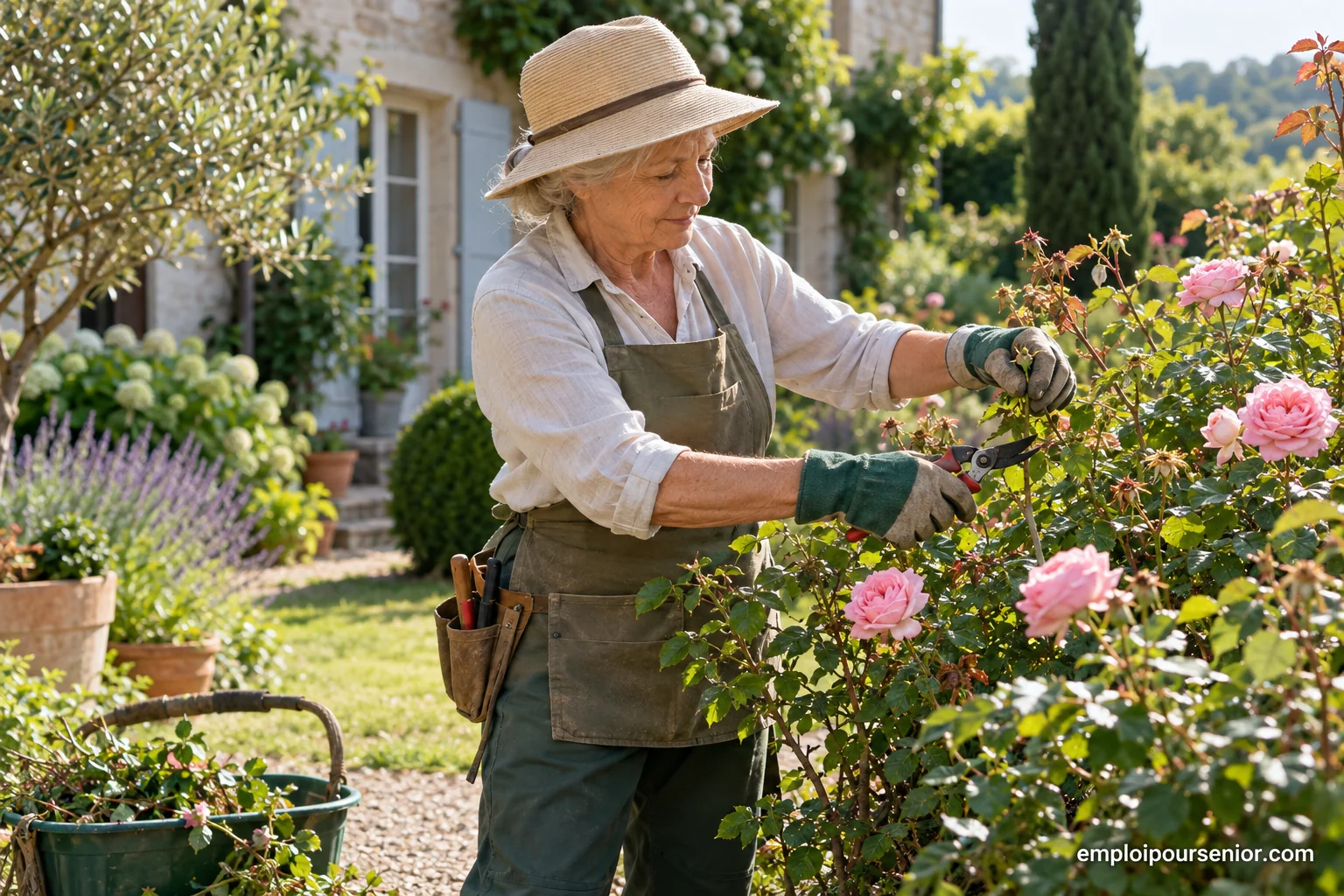
What looking after a private garden involves
A gardener working for a private client operates in a personal space, often for someone who lacks the time, the tools or the strength to maintain it. The brief is usually simple and recurring: keep the garden tidy, well kept and pleasant from one season to the next.
The most common jobs are mowing, clearing leaves, weeding, trimming shrubs and hedges, working the flower beds, watering, a little planting and taking away garden waste. More technical requests, such as tree surgery at height, arboriculture or a full landscaping scheme, belong to other trades and need other equipment.
Who this work suits
It suits retirees who enjoy manual work, already know plants well or want to learn, and are happy to work outdoors in any reasonable weather. Long professional experience is not always required for routine upkeep, which makes the field accessible, but the quality of the work is soon noticed: a badly cut hedge or a lawn scorched by a wrong mower setting shows at once.
Clients value punctuality, discretion, respect for the garden and the neighbours, reliability and a degree of independence. Older clients also like to be able to chat for a moment about what is being planted.
Seasonal work and a pace to adjust
Spring and autumn bring the most requests: the first mow, pruning, leaf clearing, preparing beds. Summer means watering and weeding, sometimes on hot days; winter is quieter, with pruning of certain species, tool maintenance and small jobs.
For a retiree, two or three half-days a week can already be a noticeable physical load. It is better to start with a few clients close by, limit travelling, build in breaks and turn down jobs that go beyond your capacity, rather than piling up tiredness and injuries.
Health, safety and equipment
Gardening puts strain on the back, knees, shoulders and hands. A few habits reduce the risks:
- warm up, vary your posture and avoid lifting heavy loads alone;
- wear gloves, closed shoes, glasses and ear protection when using machines;
- protect yourself from the sun, drink regularly and avoid the hottest hours;
- keep cutting tools sharp and check the condition of electric and petrol machines;
- check your tetanus vaccination with your doctor.
Plant-protection products need particular care: their professional use is regulated, and a training certificate may be required. Manual and mechanical methods are the better choice.
Possible statuses: employee, self-employed or through an intermediary
Several arrangements exist, each with different obligations.
- Employee of a home-services company: the company finds the clients, sometimes provides equipment and a vehicle, and offers part-time contracts. Job adverts usually state the qualifications or experience wanted.
- Direct employment by the householder: the client employs the gardener, with simplified paperwork through the declaration schemes designed for domestic employment.
- Self-employment: for example as a micro-entrepreneur in France, with a declared activity, insurance and invoicing. The rules that apply to the particular activity need checking.
- Undeclared work: to be avoided, because it exposes both gardener and client and gives no protection in case of an accident.
For a retiree, combining work with a pension follows precise rules, which should be confirmed with the pension fund before starting.
Earnings and the client's tax credit
What you earn depends on the hourly or fixed rate, the number of clients, travel and equipment costs and any contributions due. No income can be guaranteed, and a client base builds up gradually, mainly by word of mouth.
One point can help persuade a householder: according to the French authorities, small gardening jobs done at home give a tax credit of 50% of the spending, up to an annual ceiling of 5,000 euros per tax household for that category, under certain conditions. The gardener must not promise any tax benefit, however: it is up to the client to check eligibility and keep the receipts. The conditions may change from one year to the next.
Finding your first clients
The most dependable sources remain neighbours, family, apartment-block committees, retirement residences and local shopkeepers. Home-services companies also recruit gardeners for work at private homes, and some platforms put clients and providers in touch.
Whichever route you take, a few good habits apply: give a quote or a clear rate, say what is included (garden waste, tools, travel), be upfront about the limits of your skills, never use the client's equipment without agreement and keep a written record of each visit. A free first visit helps you spot the difficulties of the plot.
Example of a gradual start
Illustrative example. A 66-year-old retiree, a former technician, has long looked after his own garden. He offers help to two elderly neighbours with mowing and autumn pruning, at first on an occasional basis. He then finds out about the right declaration arrangements, buys a hedge trimmer and good secateurs, and checks his insurance.
After one season he decides to limit himself to three gardens of under 500 square metres, within walking distance, and refuses any work at height. This leaves him free time while giving him a regular activity. It is not typical of every path, but it shows a measured approach.
Pitfalls to avoid and related options
Among the pitfalls: accepting a job that is too physical, using a dangerous tool without training, neglecting insurance, underestimating travel time or working without a clear agreement on price. Garden-waste disposal and local rules on burning should also be checked with the town hall.
If garden work for private clients is too demanding, other tasks remain possible: helping to look after a shared garden, advising at a garden centre or DIY shop, running workshops for schools or clubs, watering and keeping an eye on gardens during holidays. These activities have their own rules and do not guarantee any income.
Frequently asked questions
Do I need a qualification to garden for private clients?
For routine upkeep no specific qualification is generally required, though some companies recommend a horticultural certificate or a landscaping diploma, or experience in the field. Spraying treatments or specialist work may require training certificates. It is best to check for each assignment.
Can I combine gardening with my pension?
In many cases yes, but the rules depend on the pension scheme and on your situation, particularly for self-employed income. Before starting, it is wise to ask your pension fund for written information, which will indicate any limits or formalities.
How much can I earn from gardening?
No figure can be announced: everything depends on the rate, the hours, the season, the clients and the costs to deduct. The first weeks are often modest. It is better to build a cautious budget and not rely on regular income for several months.
Can the client reduce their taxes?
According to the authorities, small gardening jobs carried out at home may give entitlement to a tax credit, within annual ceilings and under conditions. It is for the householder to check eligibility. The gardener should not guarantee any tax advantage to a client.
What equipment do I need to own?
It depends on the tasks offered. Many clients expect the gardener to bring basic tools: secateurs, spade, rake, gloves, sometimes a mower or hedge trimmer. Some companies supply equipment and a vehicle. Agree in advance what is brought and who looks after maintenance.
How do I manage tiredness and heat?
Keep sessions short, work early in the morning or late in the day in summer, drink regularly and stop at the first sign of feeling unwell. If pain keeps returning, medical advice can help you adapt the tasks, for instance by avoiding pruning at height or heavy loads.